


2024-02-26T05:07:06
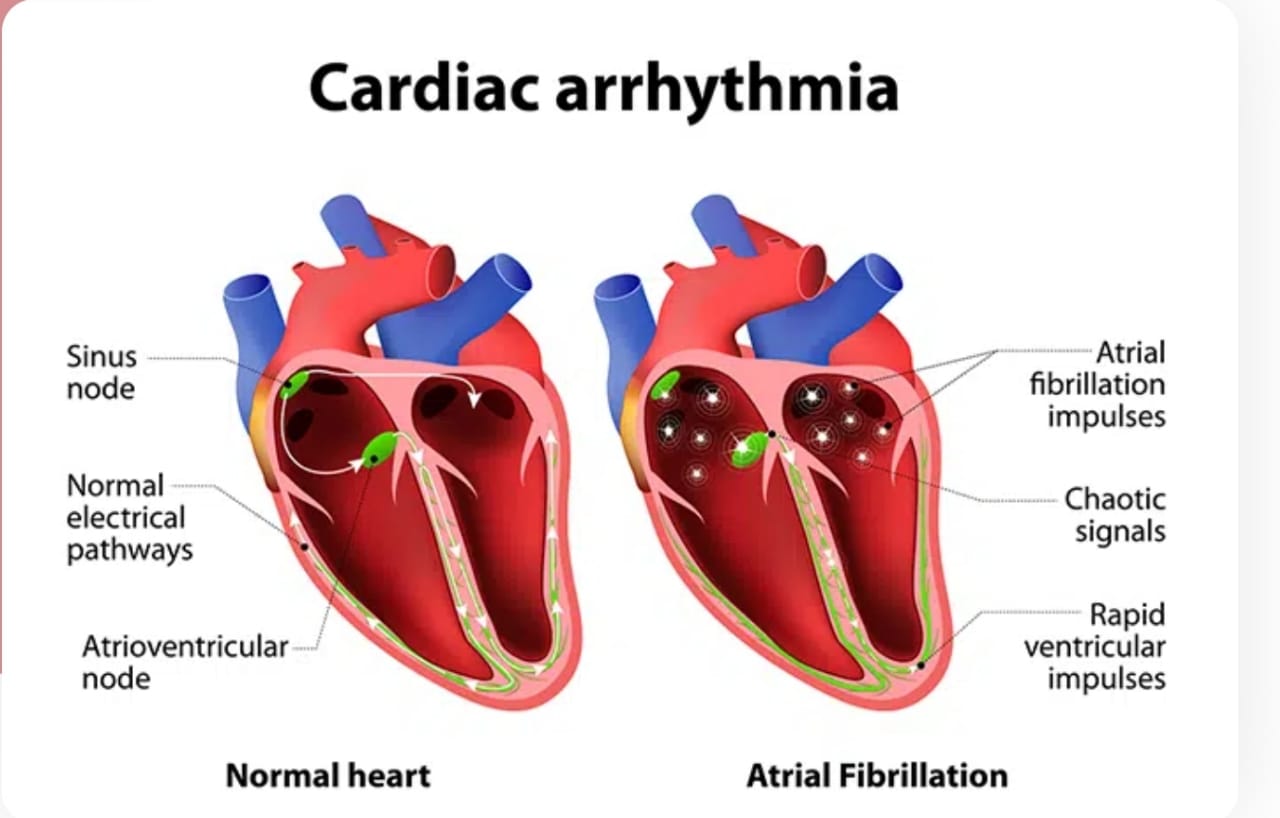
Arrhythmia refers to a group of conditions characterized by irregular heartbeats or abnormal heart rhythms. The heart's normal rhythm is regulated by electrical signals that coordinate the contraction of the heart muscles. When these electrical signals are disrupted, it can lead to irregular heartbeats, which are known as arrhythmias. There are various types of arrhythmias, including: Atrial Fibrillation (AFib): This is one of the most common types of arrhythmias and involves irregular and rapid heartbeats in the upper chambers (atria) of the heart. Atrial Flutter: Similar to AFib, atrial flutter also causes rapid heartbeats in the atria, but they occur in a more organized, regular pattern. Supraventricular Tachycardia (SVT): This is a rapid heartbeat originating above the heart's ventricles and is not associated with heart disease. Ventricular Tachycardia (VT): This type of arrhythmia involves a fast, regular beating of the heart's lower chambers (ventricles) and can be life-threatening. Ventricular Fibrillation (VFib): This is a chaotic, rapid heartbeat in the ventricles, and it is a medical emergency that requires immediate attention, as it can lead to cardiac arrest. Bradycardia: This condition is characterized by a slower than normal heart rate, often caused by issues with the heart's electrical system. Premature Contractions: These are extra, abnormal heartbeats that disrupt the regular rhythm. To know more, consult Dr. Achyut Khandekar, Senior Arrhythmia refers to a group of conditions characterized by irregular heartbeats or abnormal heart rhythms. The heart's normal rhythm is regulated by electrical signals that coordinate the contraction of the heart muscles. When these electrical signals are disrupted, it can lead to irregular heartbeats, which are known as arrhythmias. There are various types of arrhythmias, including: Atrial Fibrillation (AFib): This is one of the most common types of arrhythmias and involves irregular and rapid heartbeats in the upper chambers (atria) of the heart. Atrial Flutter: Similar to AFib, atrial flutter also causes rapid heartbeats in the atria, but they occur in a more organized, regular pattern. Supraventricular Tachycardia (SVT): This is a rapid heartbeat originating above the heart's ventricles and is not associated with heart disease. Ventricular Tachycardia (VT): This type of arrhythmia involves a fast, regular beating of the heart's lower chambers (ventricles) and can be life-threatening. Ventricular Fibrillation (VFib): This is a chaotic, rapid heartbeat in the ventricles, and it is a medical emergency that requires immediate attention, as it can lead to cardiac arrest. Bradycardia: This condition is characterized by a slower than normal heart rate, often caused by issues with the heart's electrical system. Premature Contractions: These are extra, abnormal heartbeats that disrupt the regular rhythm. To know more, consult Dr. Achyut Khandekar, Senior Interventional Cardiologist, at his Aasavari Clinic, Malviya Nagar, New Sneh Nagar, Khamla, Nagpur. #drachyutkhanderkar #cardiologistnagpur #cardiologistmadhyapradesh #cardiologistamravati #cardiologistindore #cardiologistseoni #coronaruangiographyspecialist